Distribution Transformers: Ensuring Safe & Reliable Power Delivery to Industries and Infrastructure
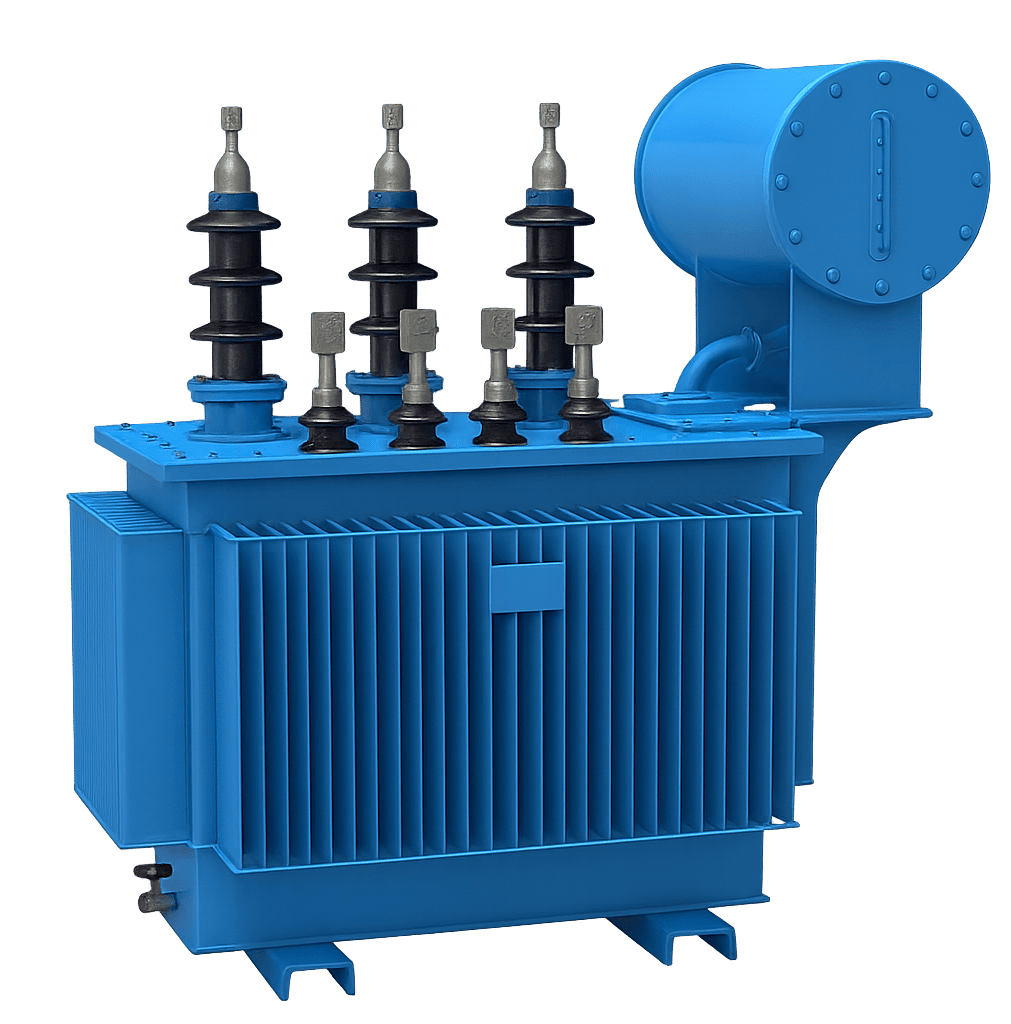
What Is a Distribution Transformer?
While power transformers move energy across large distances, distribution transformers are responsible for delivering usable electricity to the end user — industries, commercial complexes, and residential areas. They step down high transmission voltage into safe, operational voltage levels for factories, buildings, and machinery.
Key Importance
- ✔ Provide stable voltage to final consumers
- ✔ Reduce electrical hazards and equipment failures
- ✔ Improve system efficiency and lifespan
- ✔ Enable safe industrial operations
Technical Benefits
| Feature | Benefit |
|---|---|
| ONAN / ONAF cooling | Reliable operation under continuous load |
| Copper winding | Reduced I²R losses and higher efficiency |
| High insulation life | Performs reliably in harsh conditions |
| Low noise operation | Improved working environment |
| Higher overload capacity | Handles demand fluctuations safely |
Industries & Applications
Frequently Asked Questions
Can distribution transformers run outdoor?
Yes, with proper oil sealing and weather protection, they are suitable for outdoor installation.
How long do distribution transformers last?
With proper maintenance, distribution transformers can operate efficiently for 25 years or more.
What maintenance is required?
Regular oil testing, insulation checks, bushing health inspection, and leakage monitoring are recommended.
Conclusion
They may look small compared to power transformers — but no industry operates without distribution transformers. They ensure voltage stability, equipment protection, and efficient power delivery.